Precautions for powder coating spray
- Share
- Issue Time
- Oct 13,2026
Summary
Precautions for powder coating spray and some important points
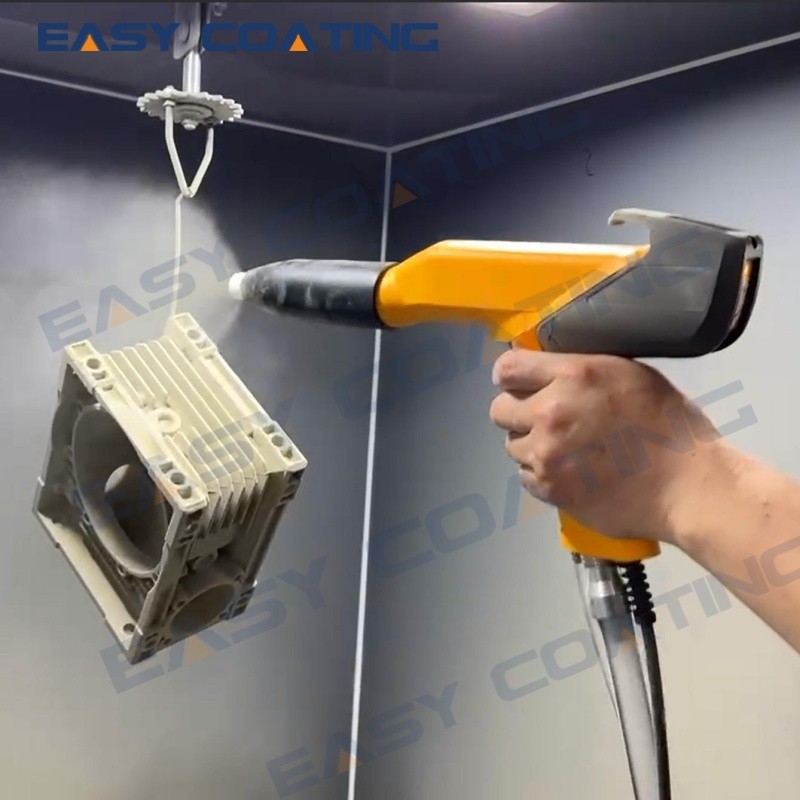
To achieve a smooth, firm coating with minimal scraps in powder coating, the key lies in closely monitoring four aspects: pre-treatment, spraying parameters, curing conditions, and dust safety. Drawing on your previous rigorous habit of checking mechanical engineering parameters, here I will go over the details that are most prone to problems.
Pre-treatment: The root cause of poor adhesion is mostly found here
1. Thoroughly remove oil and rust: The oil and rust on the surface of the substrate must be cleaned thoroughly, otherwise the coating is prone to peeling and bubbling. It is recommended to use alkaline solution for chemical degreasing, and the water washing should be thorough. The last step is best done with deionized water; workpieces with rust should be sandblasted or polished first.
2.Phosphating/Passivation Treatment: Before powder coating steel parts, it is recommended to perform phosphating, ensuring proper control over the concentration and temperature of the phosphating solution. The film weight should be maintained between 1.5~3.0g/m² for zinc-based systems and 0.5~1.5g/m² for iron-based systems. Both too thick and too thin films can affect adhesion.
3.Thorough drying: After pre-treatment, the workpiece must be dried thoroughly. It is strictly prohibited to bring water or oil into the spray booth, otherwise pinholes and bubbles may easily appear after curing.
2.Phosphating/Passivation Treatment: Before powder coating steel parts, it is recommended to perform phosphating, ensuring proper control over the concentration and temperature of the phosphating solution. The film weight should be maintained between 1.5~3.0g/m² for zinc-based systems and 0.5~1.5g/m² for iron-based systems. Both too thick and too thin films can affect adhesion.
3.Thorough drying: After pre-treatment, the workpiece must be dried thoroughly. It is strictly prohibited to bring water or oil into the spray booth, otherwise pinholes and bubbles may easily appear after curing.
Spraying operation: Parameters and techniques determine the uniformity of the coating
1.Key parameter range: The electrostatic voltage is generally controlled at 60~90kV, with appropriate adjustments for complex workpieces; the spray gun should be positioned 15~30cm away from the workpiece, as too close may lead to powder buildup and orange peel effect, while too far may significantly reduce the powder application rate; the atomizing air pressure should be maintained at 0.2~0.5MPa.
2.The technique emphasizes sequence: following the principle of "corners first, then planes; parts first, then the whole", the spray gun moves vertically and uniformly over the workpiece at a speed controlled between 30~60cm/s, avoiding pauses or sudden changes in speed.
3.Grounding must be reliable: Workpieces and hanging fixtures must be well grounded. Poor grounding will directly lead to low powder coating efficiency and uneven coating. The powder buildup on the hanging fixtures should be cleaned regularly, otherwise it will affect conductivity.
Curing: Temperature and time are the final hurdles
1, Set according to powder requirements: conventional curing temperature 180~200℃, heat
preservation for 15~20 minutes (subject to the actual temperature of the workpiece, not the set value of the oven temperature). Insufficient curing will result in soft coating and poor adhesion; overbaking will cause yellowing and brittleness.
preservation for 15~20 minutes (subject to the actual temperature of the workpiece, not the set value of the oven temperature). Insufficient curing will result in soft coating and poor adhesion; overbaking will cause yellowing and brittleness.
2. Oven temperature uniformity: The temperature difference within the oven should be controlled within ±5℃ as much as possible, and the heating rate should not exceed 30℃/min. Rapid heating can easily lead to pinholes and orange peel.
Safety and environmental protection: Dust explosion risks must be taken seriously
1.Dust concentration control: The concentration of suspended powder in the spray booth must be less than half of the minimum explosive concentration of the powder (when unknown, the maximum concentration should not exceed 15g/m³). The spray booth should be equipped with an explosion-proof fan, an explosion vent, and a flameproof valve.
2.Electrostatic grounding: All conductors within the powder coating area must be reliably grounded, with a grounding resistance of less than 100Ω. The contact resistance between the hanging fixture and the workpiece should not exceed 1×10⁶Ω. Open flames are strictly prohibited in the operation area, and workers must wear anti-static clothing.
3.Labor protection: Although powder coating itself is non-toxic, long-term inhalation of dust can still be harmful. Operators must wear dust masks, anti-static work clothes, and protective gloves.